
View Certified Lab Results

Client Log In
Riverside County
San Diego County
RCR Environmental
RCR Environmental

Promoting Healthier Living through Expert Mold Testing and Professional Mold Removal

Water Damage

Water Damage Containment: Why Negative Air Pressure Matters for Mold Remediation

RCR Environmental Team · February 5, 2026

When a pipe bursts, a toilet backs up, or a washing machine overflows, most homeowners focus on what they can see — standing water, wet carpet, soggy drywall. That's the obvious part.

What most people don't realize is that the invisible part — airborne bacteria, mold spores, and microscopic contaminants — can spread through your entire house in minutes if the affected area isn't properly contained. And once those contaminants are airborne, what started as a water damage event becomes a mold remediation project that costs far more time, money, and disruption than the original loss.

This is why containment and negative air pressure aren't optional extras in water damage restoration. They're the minimum standard of care — and the IICRC S500, the nationally recognized standard for professional water damage restoration, says so explicitly.
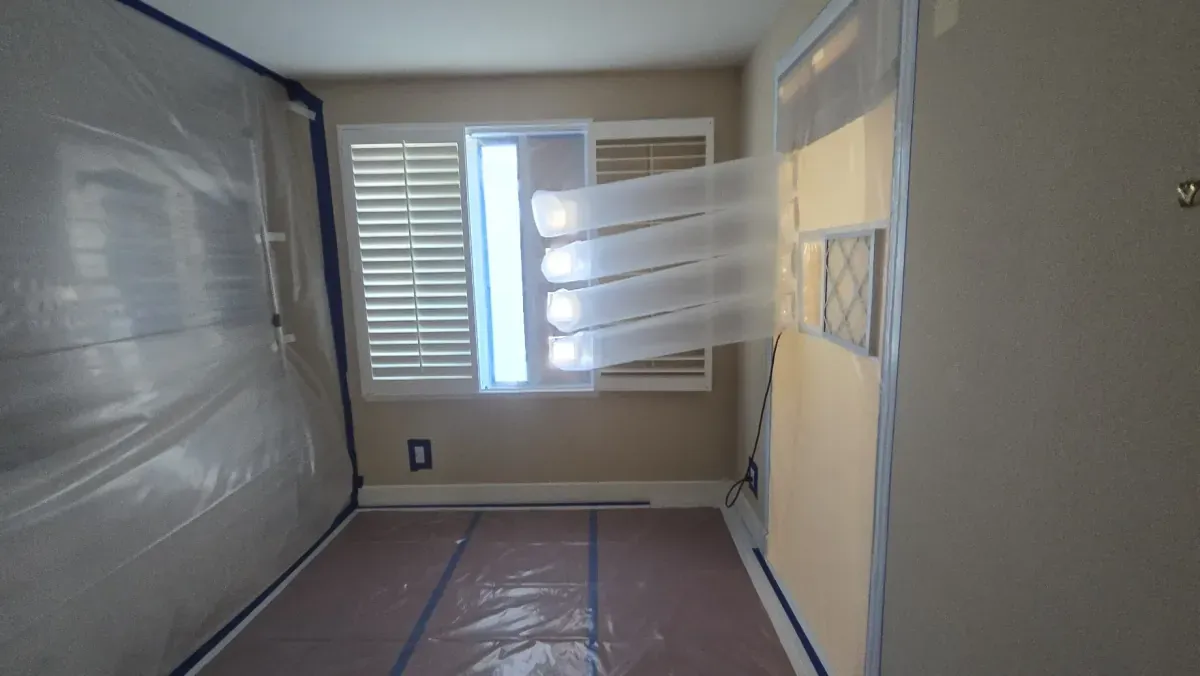
HEPA air scrubber creating negative air pressure inside a containment barrier during water damage and mold remediation

What Is Containment in Water Damage Restoration?

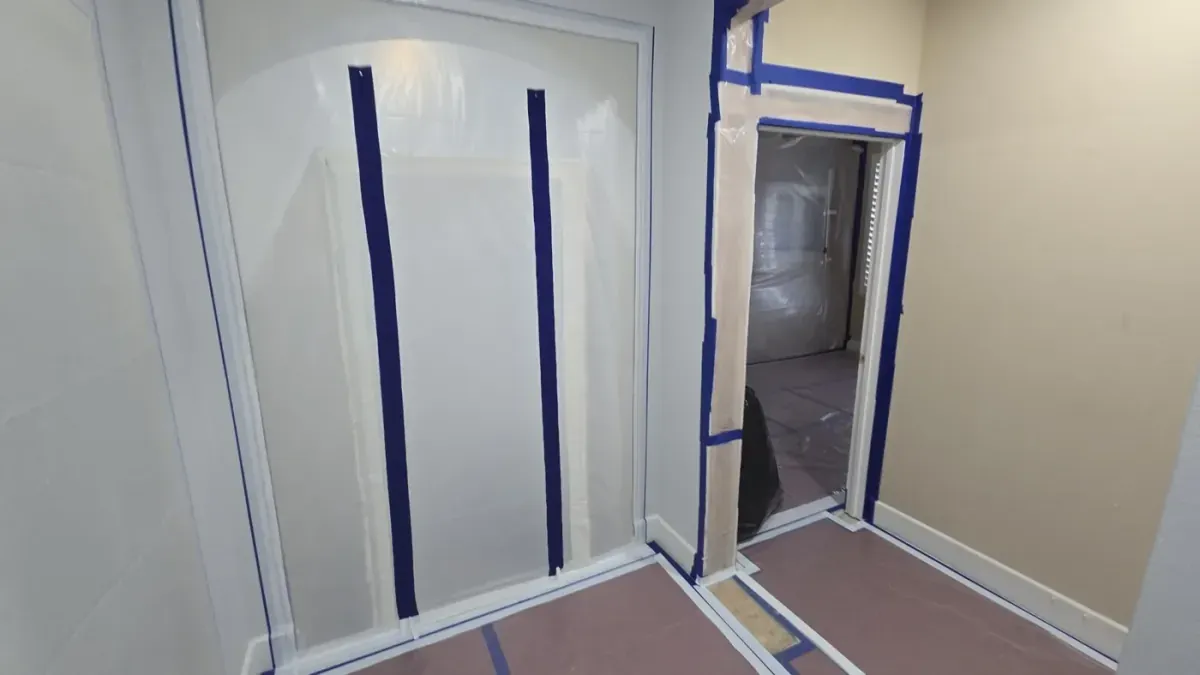
Containment is the physical isolation of a contaminated work area from the rest of the building. In practice, that means:

  • Polyethylene sheeting barriers erected around the affected zone
  • Sealed seams and openings to prevent airborne migration
  • Air filtration devices (AFDs) equipped with HEPA filters
  • Negative air pressure — air flows into the containment area rather than out of it, preventing contaminated air from reaching clean spaces

Think of it like a surgical operating room in reverse: instead of keeping outside contaminants from getting in, we're keeping inside contaminants from getting out.

When Does the IICRC S500 Require Containment?

The ANSI/IICRC S500:2021 (5th Edition) — Standard and Reference Guide for Professional Water Damage Restoration — is the nationally recognized standard of care for this work. OSHA cites it on their mold standards page as "a specific set of practical standards for water damage restoration."

The S500 ties containment requirements directly to the category of water — the contamination level, not the volume.

Category 1: Clean Water — No Containment Required

Category 1 water originates from a sanitary source — a broken supply line, melting ice, rainwater. When caught quickly and before deterioration occurs, standard structural drying procedures apply without containment.

The IICRC S500 (Section 12.1) is clear: if the preliminary determination is Category 1, the restorer can proceed without contamination controls like containment barriers or pressure differentials.

Category 2: Gray Water — Containment Is Mandatory

Category 2 water contains significant contamination and has the potential to cause discomfort or sickness if contacted or consumed. Sources include dishwasher discharge, washing machine overflow, and toilet overflow (room side of the trap — urine but no feces).

These aren't edge cases. They're some of the most common residential water losses we respond to in Murrieta, Temecula, and throughout Riverside County.

The IICRC S500 (Section 12.3) uses the word "SHALL" — meaning mandatory, required, component of accepted standard of care — when describing what happens next:

  • Mold remediation and decontamination before restorative drying
  • Engineering controls — containment and managed airflow
  • Negative air pressure relative to uncontaminated areas
  • Appropriate PPE for workers

Category 3: Black Water — Full Containment, No Exceptions

Category 3 water is grossly contaminated and can contain pathogenic, toxigenic, or other harmful agents. This includes sewage backups, any wasteline backflow originating from beyond a trap, flooding from rivers or streams, and seawater intrusion.

The IICRC S500 (Section 12.3) requires:

  • Full mold remediation before restorative drying
  • Containment barriers AND negative pressure
  • Full PPE including respirators
  • Bulk material removal before detailed cleaning
  • HEPA vacuum systems or direct exhaust to exterior

In Southern California, we also see storm-driven water intrusion during heavy rain seasons that qualifies as Category 3.

Why Negative Air Pressure Matters for Mold Remediation

Negative air pressure means the air pressure inside the containment zone is lower than the surrounding areas. This creates a directional airflow — air moves into the work area through any gaps, rather than contaminated air pushing out into the rest of the home.

1) Airborne Contaminant Control

When we cut contaminated drywall, pull saturated insulation, or extract standing water from a Category 2 or 3 event, we're disturbing materials loaded with bacteria, mold spores, and potentially hazardous particulates. Without negative air pressure, those contaminants migrate through the HVAC system, through doorways, and into every room of the house — turning a one-room water damage event into a whole-house mold remediation project.

2) It's the Standard of Care — Not a Suggestion

The IICRC S500 uses "SHALL" when describing containment for Category 2 and 3 water. In the context of this standard, "shall" means mandatory — required by natural law or regulatory requirement, and a component of accepted standard of care. This isn't a recommendation or a best practice. It's the baseline expectation for any qualified restoration professional.

3) OSHA Reinforces It

For large or heavily contaminated areas, OSHA expects work area isolation, HEPA-filtered exhaust, airlocks and decontamination rooms, and consultation with industrial hygienists. Their position is clear: employers must comply with all relevant OSHA standards and the General Duty Clause (Section 5(a)(1) of the OSH Act), which requires a workplace free from recognized hazards likely to cause death or serious harm.

The Deterioration Problem: Why "Clean Water" Doesn't Stay Clean

One of the most misunderstood aspects of water damage is category deterioration — and it's the reason so many water losses end up requiring mold remediation.

A loss that starts as Category 1 doesn't stay that way.

The IICRC S500 (Section 10.4.1) explains that once microorganisms become wet from the water intrusion, depending on the length of time they remain wet and the temperature, they can begin to grow and change the category of the water. Odors can indicate that Category 1 water has deteriorated.

The 48-Hour Threshold (Section 5.2): Gray water in flooded structures that remains untreated for longer than 48 hours may change to Category 3 — black water.

What does this mean in practice? A "clean" supply line break that sits behind a wall for three days before discovery is no longer Category 1. It has likely deteriorated to Category 2 — and now containment, negative air pressure, and mold remediation protocols are mandatory under the IICRC S500.

This is exactly why we document conditions thoroughly during our initial inspection. Category determination isn't a guess — it's a science-backed assessment that drives every decision about scope, safety, and containment.

How RCR Environmental Sets Up Containment

Our containment process follows IICRC S500 protocols. Here's what a properly contained Category 2 or 3 job looks like:

Step 1: Inspection and Category Determination

We assess the water source, time elapsed, materials affected, temperature conditions, and any visible signs of deterioration including odor. We use thermal imaging and moisture mapping to document the full extent of water migration — not just what's visible on the surface.

Step 2: Containment Barrier Construction

We erect polyethylene isolation barriers to physically separate the contaminated area from clean spaces. Barriers are sealed at all seams, floor-to-ceiling, and around penetrations (outlets, pipes, vents).

Step 3: Negative Air Pressure Establishment

We install HEPA-filtered air filtration devices (AFDs) that exhaust air from the containment zone, creating negative pressure relative to the surrounding areas. This is a SHALL requirement for Category 2 and 3 water under the IICRC S500.

Step 4: Remediation Before Drying

This is a critical sequence that many less-experienced companies get wrong. The IICRC S500 is explicit: mold remediation occurs BEFORE restorative drying for Category 2 and 3 water. That means contaminated materials are removed, surfaces are cleaned, and the area is decontaminated before we set up drying equipment.

Step 5: HEPA Vacuuming and Disinfection

After material removal and cleaning, we HEPA vacuum all surfaces — inside and outside the work area — to capture settled spores and particulates. Hard non-porous surfaces are then treated with EPA-registered antimicrobials.

Step 6: Post-Remediation Verification

We verify that mold remediation is complete before transitioning to restorative drying. For high-risk situations, this may include third-party evaluation by an Indoor Environmental Professional (IEP).

What Happens When Containment Is Skipped

We've been called in to fix jobs where containment was inadequate or skipped entirely. The consequences are predictable and costly:

  • Cross-contamination — Mold spores and bacteria spread to previously unaffected rooms, turning a one-room problem into a whole-house mold remediation project
  • HVAC contamination — Airborne particulates enter the duct system and distribute throughout the entire building
  • Health effects — Occupants experience respiratory symptoms, allergic reactions, or worse — especially vulnerable populations (elderly, children, immunocompromised)
  • Failed clearance testing — The project can't pass post-remediation air quality verification, requiring additional remediation cycles
  • Increased cost — What should have been a contained, controlled project becomes exponentially more expensive

OSHA is direct about why physical containment matters: "Just killing mold is not enough; mold must be removed because the allergenic/toxic components remain even in dead mold." You can't spray your way out of a containment problem. Physical isolation and negative air pressure are the only way to prevent cross-contamination during active mold remediation work.

The Equipment Behind Proper Containment

Proper containment isn't a roll of plastic sheeting and a box fan. Here's what we deploy on a contained Category 2 or 3 job:

Air Filtration Devices (AFDs) with HEPA Filtration — True HEPA filtration captures 99.97% of particles at 0.3 microns. This is a sealed system where all intake air passes through the filter without bypass. A shop-vac with a "HEPA-style" cartridge does not meet this standard.

Commercial-Grade Dehumidification — Initial capacity is calculated based on the class of water intrusion, building materials, weather conditions, and project requirements. We don't guess — we calculate.

Air Mover Deployment — Per IICRC S500 guidelines: one air mover in each affected room, plus additional movers calculated at 1 per 50-70 SF of affected wet floor, 1 per 100-150 SF of affected wet ceiling and upper walls, and 1 per wall inset or offset greater than 18 inches. Fractional results get rounded up.

Psychrometric Monitoring — We track temperature, humidity, and moisture content daily to make appropriate adjustments to the number, type, and placement of equipment based on materials' moisture readings.

Southern California: Additional Compliance Requirements

Operating in Riverside and San Diego Counties means we also comply with regional regulations that many restoration companies overlook:

SCAQMD Rule 1403 — Asbestos Testing

Before any demolition or renovation work — including water damage restoration and mold remediation — South Coast Air Quality Management District Rule 1403 requires asbestos survey testing. There is no exemption based on building age. Non-compliance carries penalties up to $25,000 per day.

This means even a flood cut on drywall in a brand-new home technically requires asbestos testing under SCAQMD jurisdiction. We build this into our scope from day one.

Why Insurance Adjusters Sometimes Push Back on Containment

If containment is standard of care, why do some adjusters question it?

The short answer: cost. Containment adds equipment, labor, and time to a project. But the IICRC S500 doesn't make containment optional based on budget — it makes it mandatory based on contamination level.

When OSHA explicitly cites the IICRC S500 as the practical standard of care, refusing to fund containment procedures is asking restoration professionals to work below federally recognized safety standards.

If you're dealing with an adjuster who's questioning containment costs on a Category 2 or 3 loss, ask for the denial in writing and reference the specific IICRC S500 sections that require it. Documentation protects everyone — the homeowner, the contractor, and the property.

FAQs

Does all water damage require containment and mold remediation?

No. Category 1 water (clean source, caught quickly, no deterioration) can typically be dried without containment. But Category 2 and 3 water — which covers most losses involving washing machines, dishwashers, toilets, and any water that's sat for more than 48 hours — requires containment and remediation before drying can begin.

How long does it take for clean water to become contaminated?

The IICRC S500 identifies a 48-hour threshold. Category 2 (gray) water left untreated for more than 48 hours can deteriorate to Category 3 (black water). Category 1 water can deteriorate to Category 2 once microorganisms begin growing — which is influenced by time, temperature, and the materials involved.

Can I just set up fans and dry the area myself?

For a small Category 1 spill caught immediately — possibly. But for anything involving Category 2 or 3 water, or any loss that's been sitting more than 48 hours, running fans without containment can actually make things worse by aerosolizing contaminants and spreading them through your home. That's how a water damage event turns into a mold remediation project.

Is negative air pressure really necessary for a residential water loss?

Yes, for Category 2 and 3 water. The IICRC S500 uses "SHALL" — meaning mandatory — when describing negative pressure requirements for these contamination levels. It's not about the size of the loss; it's about what's in the water.

What's the difference between water damage containment and mold remediation containment?

The principles are the same — physical barriers, negative air, HEPA filtration — because the goal is the same: prevent contaminated air from reaching clean spaces. The difference is when it's triggered. In pure mold remediation, containment is based on the extent and type of mold growth. In water damage restoration, containment is triggered by water category. In practice, water damage and mold remediation overlap constantly — especially when water has been present long enough for mold to establish.

My insurance company says containment isn't necessary. What do I do?

Request the denial in writing. Then reference IICRC S500 Sections 12.3 and 12.3.2, which use mandatory "SHALL" language requiring containment and negative pressure for Category 2 and 3 water. OSHA cites the IICRC S500 as the practical standard of care. If your adjuster is asking your contractor to skip containment, they're asking them to work below the nationally recognized standard.

Key Takeaways

  • Water damage containment requirements are determined by water category (contamination level), not volume or area size
  • Category 2 and 3 water require containment, negative air pressure, and mold remediation before drying — per IICRC S500 "SHALL" language
  • Category 1 water can deteriorate to Category 2 or 3 within 48 hours, making containment mandatory even for "clean" losses that weren't caught quickly
  • Negative air pressure prevents contaminated air from migrating into clean spaces during restoration
  • Skipping containment is the most common reason a one-room water loss becomes a whole-house mold remediation project
  • SCAQMD Rule 1403 requires asbestos testing before any demolition in our service area — no building age exemption

Written by RCR Environmental (Murrieta, Riverside County). We perform moisture investigations, mold inspections and testing, water damage restoration, and mold remediation with full containment and negative air pressure. Serving Murrieta, Temecula, Menifee, Wildomar, Winchester, and Riverside County. This article is general information and not a substitute for a site-specific evaluation.
Need Professional Mold Help?

Our certified team is ready to help you with mold inspection, testing, and remediation. Contact us for a free assessment.

Discussion

25 comments on “Water Damage Containment: Why Negative Air Pressure Matters for Mold Remediation

J
Jennifer M.Temecula, CA

This explains so much about what went wrong with our situation. The contractor who ripped out our drywall with no barriers? That was a Category 2 situation — dishwasher leaked behind the wall and sat there for who knows how long. No containment, no negative air, nothing. We ended up with mold in the hallway closet that wasn't there before the "restoration." Reading this makes me realize the contractor didn't just cut corners — he violated the standard of care. I'm keeping this article bookmarked for the next time someone tells me containment is 'overkill.'

K
Kevin D.Hemet, CA

Jennifer, I see this on job sites constantly. Guys will walk contaminated drywall through a living room with the HVAC running full blast. Then six weeks later the homeowner calls someone else because there's mold growing on supply vents in bedrooms that were nowhere near the original water damage. The S500 exists for exactly this reason — but too many companies treat it like a suggestion instead of a standard. If a contractor tells you negative air 'isn't needed' on a Cat 2 or Cat 3 loss, that tells you everything you need to know about their qualifications.

A
Amy R.Riverside, CA

I wish I'd read this two months ago. Our washing machine supply line burst while we were at work. By the time we got home, the entire laundry room and part of the kitchen had standing water. We thought we'd saved money by renting fans from Home Depot and drying it ourselves. Three weeks later we started smelling something in the walls. Now we're looking at mold remediation for the whole kitchen and part of the hallway. Would proper containment have prevented this?

R
RCR EnvironmentalMurrieta, CA

Amy, we're sorry you're dealing with that — and unfortunately, your situation is one of the most common scenarios we respond to. Here's what likely happened: a washing machine supply line burst is initially Category 1 (clean water from a pressurized supply). But by the time you got home — hours later — and depending on what materials the water contacted (subflooring, wall cavities, insulation, organic debris behind cabinets), the clock was already running on category deterioration. The IICRC S500 (Section 5.2) is specific: Category 2 water left untreated beyond 48 hours can deteriorate to Category 3. And Section 10.4.1 explains that Category 1 water deteriorates once microorganisms become wet and begin growing — which is driven by time and temperature. In a warm Riverside home, that process accelerates. When you set up rental fans without containment, you did what most homeowners would logically do. But without knowing the water category and without containment barriers, those fans almost certainly pushed moisture and airborne contaminants into wall cavities and adjacent spaces that weren't originally affected. That's how a laundry room loss becomes a kitchen-and-hallway mold remediation project. The right sequence for a loss like yours would have been: (1) determine the water category, (2) set up containment if Category 2 or 3, (3) remediate contaminated materials, and (4) THEN begin restorative drying. If you'd like us to take a look at what you're dealing with now, we can do a moisture assessment with thermal imaging to map the full extent of the water migration and determine your remediation scope. The initial assessment is free — give us a call at (951) 225-1445.

C
Carlos P.Lake Elsinore, CA

Amy, don't beat yourself up. I did almost the same thing a couple years ago — borrowed my neighbor's industrial fan and pointed it at the wet carpet like I was trying to dry a car wash. Turns out I was basically running a mold distribution system. Expensive lesson, but at least now you know what proper restoration actually looks like. And honestly, if nobody ever told you about water categories and containment, how would you know? That's why articles like this matter.

M
Martin S.Perris, CA

Currently fighting with my insurance company over a sewage backup in our downstairs bathroom. Adjuster came out, spent maybe 20 minutes, and said containment was 'overkill for the square footage involved.' It's a Category 3 sewage event. There's no version of this where negative air and containment aren't required. I'm going to print out those IICRC S500 section references and send them over. If containment is standard of care — and OSHA agrees — then the adjuster doesn't get to override it based on his gut feeling about square footage.

R
RCR EnvironmentalMurrieta, CA

Martin, you're right — and your instinct to get it in writing is exactly the right move. Category 3 water is grossly contaminated by definition (IICRC S500, Section 10.4.1). The containment requirements in Section 12.3 use mandatory "SHALL" language regardless of affected area size. There's no square footage threshold below which containment becomes optional for Cat 3 — that concept doesn't exist in the standard. Here's what we'd recommend: (1) Request the adjuster's denial or scope reduction in writing, specifically asking them to cite the standard or guideline they're using to justify no containment on a Category 3 loss. (2) Have your restoration company document the water category determination with specifics — source, duration, materials affected, and the IICRC S500 sections that apply. (3) If the adjuster's scope conflicts with S500 requirements, submit a formal supplement with the standard references attached. Adjusters are not required to follow the S500, but when OSHA explicitly cites it as the practical standard of care, denying containment on a Cat 3 loss creates a liability gap that most carriers don't want to defend. Persistence and documentation win these disputes more often than people think.

P
Patricia H.Fallbrook, CA

Martin, 20 minutes for a sewage backup assessment? That's about how long my husband spent "evaluating" our mold situation before deciding bleach and a prayer would fix it. Spoiler: it did not. Insurance adjusters and my husband have one thing in common — they both want the problem to be smaller and cheaper than it actually is. Stick to your guns and get it in writing. The IICRC didn't write a 200-page standard for people to ignore it.

R
Robert A.Winchester, CA

Seeing this from the water damage angle makes even more sense now. When we had mold remediation done last year, the crew set up full containment with zip doors and negative air — I could feel the air pulling inward when I stood near the door. At the time I thought it was specifically a mold thing. Now I understand it applies to the water event that caused the mold in the first place. Same tools, same reason, different trigger.

S
Sarah K.French Valley, CA

Robert, that's exactly the connection I hadn't made either. Our bathroom mold remediation probably started as a Category 2 water situation that nobody caught. The plumber fixed the leak, but nobody treated the water damage as contaminated. Six months later — mold. If containment had been set up during the original water event, we probably never would have needed the mold remediation at all. It's like the article says: the order matters.

D
Denise F.Lake Elsinore, CA

I manage 14 rental units in Lake Elsinore and this is exactly the kind of information I need to share with my maintenance team. We've had two water heater failures this year alone, and both times the plumber just "dried it out" without any consideration of contamination level or how long the water had been sitting. I'm now requiring any water loss response to include category determination before anyone touches anything. This could save me from a much bigger liability down the road — especially with California's habitability standards.

D
David R.Murrieta, CA

Denise, that category determination step is huge. When we had our water damage, the contractor didn't even turn off the HVAC during demo. Mold showed up on supply vents in two other rooms a few weeks later. If he'd done a proper category assessment and set up containment, our one-bathroom problem wouldn't have turned into a three-room mold remediation project. As a property manager, you're probably saving yourself tens of thousands by getting this right up front.

L
Lisa G.Wildomar, CA

The 48-hour deterioration section really hit home. We had a slow leak under our bathroom that was probably active for weeks before we noticed. By the time we found it, everything behind the wall was Category 2 at minimum. The HVAC contamination section of this article was exactly our story — spores got pulled into the return vent and distributed through the whole house. If the original water event had been handled with proper containment and category determination, we probably wouldn't have needed the mold remediation in the rest of the house. Expensive lesson in why you don't let water sit.

R
Randy C.Menifee, CA

Good callout on the SCAQMD Rule 1403 requirement. I work in commercial construction and most residential contractors have no idea this applies to them too. We had a water damage restoration company start cutting drywall in a 2015-build house without asbestos testing. When our project manager flagged it, they said "it's a new house, there's no asbestos." That's not how the rule works — there's no age exemption. $25,000 per day in penalties is no joke. If your restoration company doesn't know about Rule 1403, what else are they skipping?

G
Greg H.Murrieta, CA

"If your restoration company doesn't know about Rule 1403, what else are they skipping?" Randy, I'm going to embroider this on a throw pillow. My wife has been saying a version of this every time I suggest we handle something ourselves. After our last DIY plumbing adventure — which my wife refers to as 'The Incident' — I've learned that 'how hard can it be' are the five most expensive words in the English language.

V
Vanessa T.Lake Elsinore, CA

The insurance section of this article is spot-on. When we found mold behind our laundry room wall from a supply line leak, the adjuster tried to separate the "water damage" from the "mold damage" and cap the mold portion at $2,500 per our policy. But the whole thing was caused by the same plumbing failure. RCR's advice from a previous article — about getting your documentation wording right before filing the claim — literally changed the outcome for us. Our assessment documented it as water damage from a failed plumbing connection with resulting secondary damage, not as a standalone mold claim. That distinction is everything.

R
RCR EnvironmentalMurrieta, CA

Vanessa, you just described exactly why the order of operations matters so much with insurance. Most Southern California homeowner's policies cap mold coverage at $2,500 to $10,000 — which barely covers testing, let alone remediation. But when the mold is secondary to a covered peril (a plumbing failure, a burst pipe, a water heater failure), the correct way to document it is as water damage with secondary effects, not as a standalone mold event. The difference isn't about gaming the system — it's about accurately describing what happened. A plumbing failure caused water intrusion, the water sat long enough for microorganisms to establish, and now the affected materials need remediation. That's a water damage claim with mold as a consequence, not a mold claim. The documentation language on the initial assessment — the one that gets submitted with the claim — sets the framework for the entire adjustment. That's why we always recommend calling us before filing. We document what actually happened in language that's accurate and aligns with how the policy is structured. It's not spin; it's precision.

A
Amy R.Riverside, CA

Update on our situation: called RCR for the assessment. Turns out the water migrated a lot further than we thought — thermal imaging showed moisture in the subfloor extending about 8 feet past the visible damage line. The category had deteriorated to Cat 2 based on how long it sat. We're getting the full remediation done with containment this time. Lesson learned: rental fans and hope is not a restoration plan.

C
Carlos P.Lake Elsinore, CA

Amy, glad you got it checked properly this time. The thermal imaging finding doesn't surprise me at all — water follows gravity and the path of least resistance. What you see on the surface is never the full picture. At least now you know the actual scope instead of guessing.

M
Martin S.Perris, CA

Update on the insurance fight: took RCR's advice and requested the adjuster's scope reduction in writing with the specific standard he was citing. Turns out he wasn't citing anything — just his own opinion. Submitted a formal supplement with the IICRC S500 Section 12.3 references and our restoration company's documentation. Got approved for full containment and remediation within a week. Persistence works.

P
Patricia H.Fallbrook, CA

Martin, this is genuinely satisfying to read. "He wasn't citing anything — just his own opinion" is the most insurance-adjuster sentence I've ever heard. Congratulations on getting it approved. Printing out standards references and making people do their homework is apparently the cheat code for dealing with insurance.

A
Angela W.Canyon Lake, CA

I commented on your containment article a few months ago when I was deciding between a spray-and-wipe company and a real remediation company. Went with containment, and they found mold extending 3 feet beyond the visible patch. Now reading this, I realize my closet mold was probably caused by an old water event that nobody ever properly addressed — the closet shares a wall with the laundry room. Water damage first, mold second. Wish I'd understood the connection sooner.

M
Michael T.Menifee, CA

Quick practical question: our water heater is in the garage and it's 11 years old. If it fails and floods the garage, does that start as Category 1? The garage has drywall on the shared wall with the house. Trying to understand what we'd actually be dealing with if it goes.

R
RCR EnvironmentalMurrieta, CA

Michael, good question. A water heater tank failure typically starts as Category 1 — it's pressurized potable water from the supply. But the clock starts immediately. If the water contacts the concrete slab (which in garages usually has years of oil, dirt, and debris), contacts stored items on the floor, or sits long enough for the 48-hour deterioration window to pass, it can escalate to Category 2. The shared wall with drywall is your main concern — water wicks up drywall fast and the paper facing is an organic food source for mold. If your water heater fails, the two priorities are: stop the water and call a professional before you start drying. Category determination drives everything that comes after.

K
Kevin D.Hemet, CA

Michael, one thing to add — most water heater failures happen slowly before they fail catastrophically. Check the bottom of your pan for rust staining. If your water heater is 11 years old and you see any corrosion or weeping at the bottom, it's giving you a warning. Replacing it proactively is a lot cheaper than the water damage and remediation that comes after a tank rupture.

Leave a Comment

More Articles

Keep Reading

What "Containment Setup" Means in Mold Remediation
Mold RemediationJanuary 29, 2025

What "Containment Setup" Means in Mold Remediation

Containment setup is the backbone of safe mold remediation. Learn why physical barriers, negative air pressure, HEPA filtration, and controlled work practices are critical to keeping contamination isolated during removal.