
View Certified Lab Results

Client Log In
Riverside County
San Diego County
RCR Environmental
RCR Environmental

Promoting Healthier Living through Expert Mold Testing and Professional Mold Removal

Mold Remediation

Mold Remediation: What Every Homeowner Needs to Know Before Hiring a Company

RCR Environmental Team · February 13, 2026

Mold isn't just ugly — it's a documented health hazard backed by decades of federal research. Yet most of the information homeowners find online is either oversimplified ("just spray bleach on it") or designed to scare you into an unnecessary sale. Neither helps you make good decisions.

This guide answers the most common questions we hear from homeowners across Riverside and San Diego Counties — with answers grounded in the specific IICRC, EPA, and OSHA standards that govern this work.

If you take one thing away from this post: mold remediation is not mold removal. Removal is one step in a multi-phase process. Skipping steps doesn't save money — it guarantees the problem comes back.
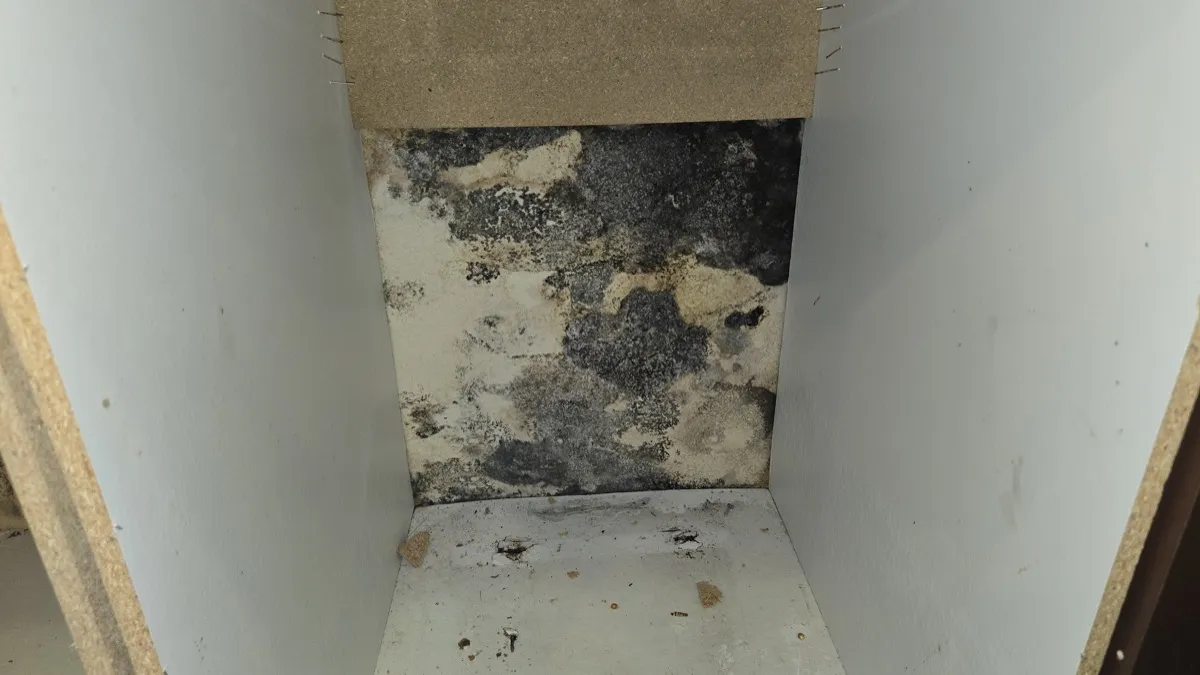
Black and gray mold growth discovered hidden behind kitchen cabinets on drywall during a mold inspection

"Is All Mold Dangerous, or Just Black Mold?"

This is the most common misconception we encounter. "Black mold" (Stachybotrys chartarum) gets the headlines, but any mold species can trigger health effects — and the color of mold does not determine its toxicity.

OSHA's position is unambiguous: "Just killing mold is not enough; mold must be removed because the allergenic/toxic components remain even in dead mold." (OSHA SHIB 03-10-10)

That last part is critical. Dead mold is still hazardous. The allergenic proteins and mycotoxins don't disappear when the organism dies. This is why spraying bleach on visible mold and calling it done doesn't actually solve the problem — it may kill surface mold, but it leaves behind the compounds that cause health effects and does nothing about spores that have already become airborne.

Common mold species we identify in Riverside and San Diego County homes — Aspergillus, Penicillium, Cladosporium, Alternaria — are all capable of causing respiratory symptoms, allergic reactions, and illness in susceptible individuals. Focusing only on "black mold" gives homeowners a false sense of security about other species that can be equally problematic.

If you're concerned about mold exposure symptoms, that guide covers what to watch for and when to see a doctor.

"Can I Just Clean Mold Myself With Bleach?"

It depends on the size, location, and what caused the moisture. Here's the honest answer:

When DIY may be appropriate:

  • Visible mold on hard, non-porous surfaces (tile, glass, metal)
  • Less than approximately 10 square feet total
  • No underlying water damage or moisture problem
  • No occupants who are immunocompromised, very young, or elderly

When you need a professional:

  • Mold covers more than 10 square feet
  • Mold is on porous materials (drywall, carpet, insulation)
  • The source of moisture hasn't been identified or resolved
  • Mold is inside wall cavities, HVAC systems, or other concealed spaces
  • Occupants include vulnerable populations
  • Mold returns after cleaning

The 10-square-foot threshold comes directly from EPA guidance. Below that, a healthy adult can often handle cleanup on hard surfaces with detergent and water. Above that, EPA directs homeowners to follow professional mold remediation protocols.

Here's what EPA says about bleach specifically: "Using a chemical that kills organisms such as mold (e.g., chlorine bleach) is not recommended as a routine practice during mold cleanup." EPA explains that dead mold can still cause allergic reactions, so killing mold isn't enough — you must physically remove it.

The bottom line: Bleach on a bathroom tile? Probably fine. Bleach on moldy drywall behind your shower? That's not remediation — it's cosmetics. The drywall needs to come out.

"What's the Difference Between Mold Removal and Mold Remediation?"

This distinction matters more than any other concept in this post.

Mold removal is pulling moldy drywall off a wall. It's one task.

Mold remediation is a systematic, multi-phase process governed by ANSI/IICRC S520 (Standard for Professional Mold Remediation) and reinforced by EPA, OSHA, and CDC guidance. It includes:

  1. Assessment and category determination — Identifying the contamination source, affected materials, and scope
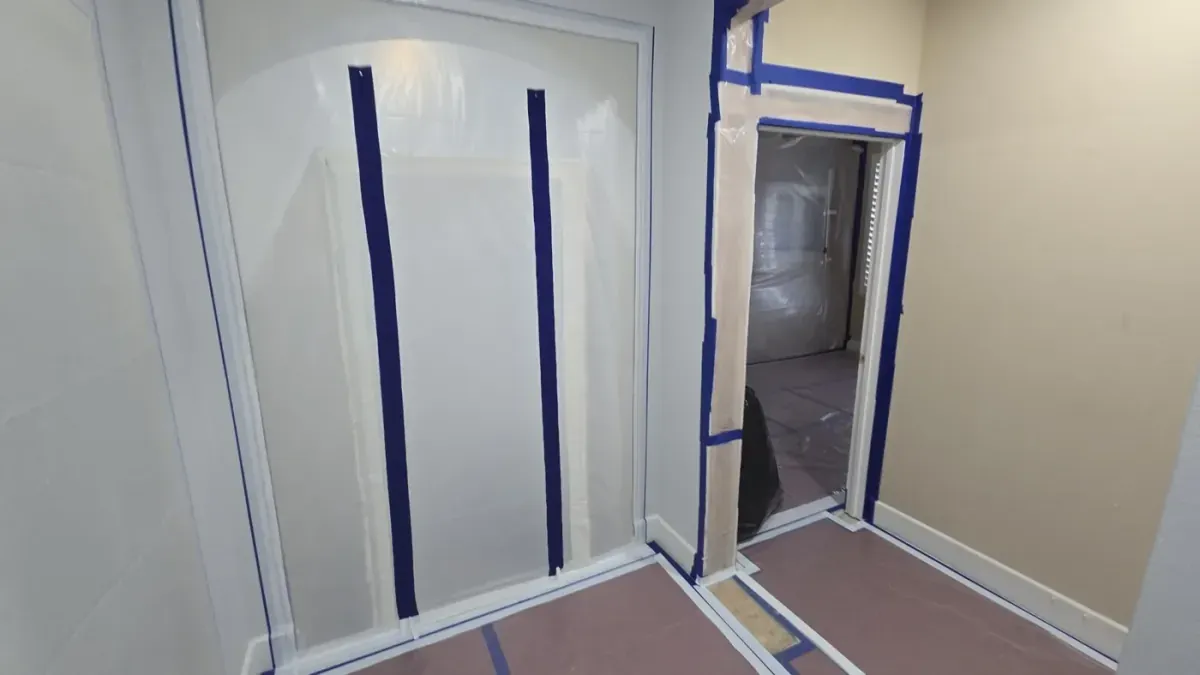
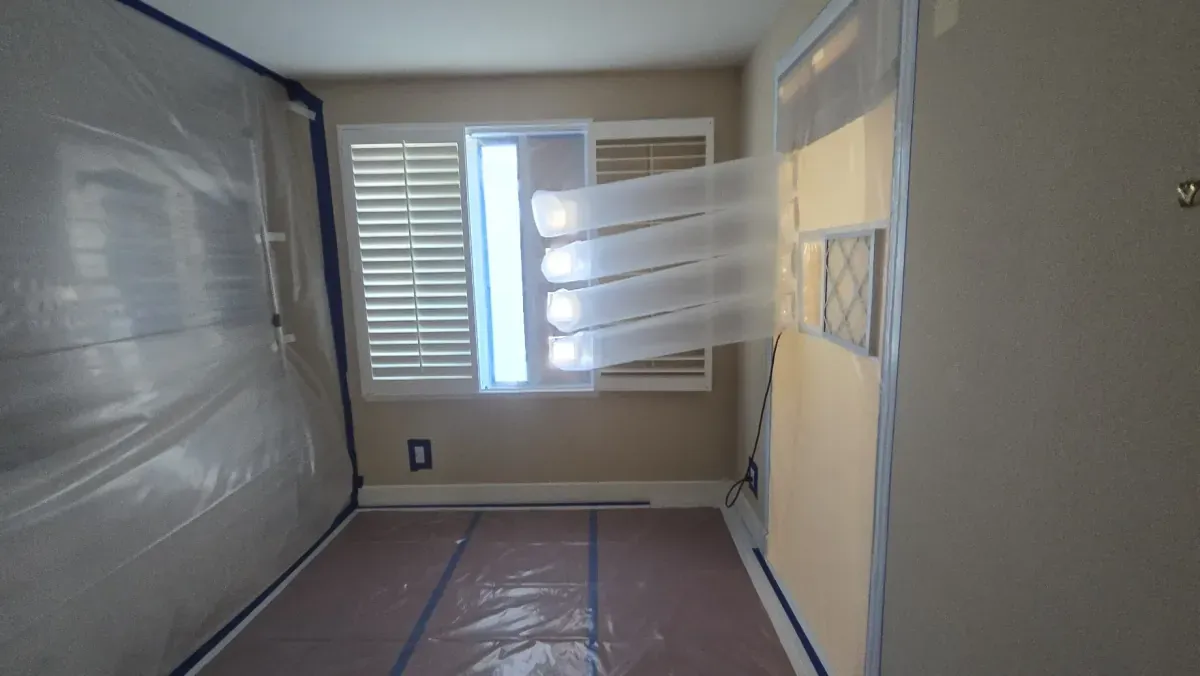
  2. Containment — Physical isolation of the contaminated area with polyethylene barriers and negative air pressure to prevent spore migration
  3. Source control — Fixing the moisture problem that caused the mold
  4. Material removal — Removing contaminated porous materials that cannot be adequately cleaned
  5. Cleaning and HEPA vacuuming — Detergent cleaning of remaining hard surfaces, followed by HEPA vacuuming to capture settled spores and particulates
  6. Antimicrobial application — Disinfecting hard non-porous surfaces with EPA-registered products
  7. Post-remediation verification — Confirming remediation is complete, potentially including third-party clearance testing by an independent Indoor Environmental Professional
  8. Equipment decontamination — Thorough cleaning of all equipment used, because mold and spores stick to tanks, hoses, and attachments

A company that shows up, tears out some drywall, and leaves is doing removal. A company that follows this complete process is doing remediation. The difference determines whether your mold problem actually gets solved.

"Can I Just Spray Antimicrobial Instead of Removing Materials?"

Every federal agency that has addressed this is in agreement: spraying mold without physical removal does not work.

OSHA is direct: "Just killing mold is not enough; mold must be removed because the allergenic/toxic components remain even in dead mold." The Whole Building Design Guide reinforces this, explaining that biocides alone will not solve the problem on porous and semi-porous materials because mold remains allergenic and toxigenic even after it dies.

When antimicrobials ARE appropriate: Antimicrobials have a legitimate role — but only after physical removal and cleaning, not instead of it. The Field Guide for Flooded Home Cleanup (EPA/HUD/CDC/FEMA) prescribes a clear residential sequence: clean with detergent, dry completely, HEPA vacuum all surfaces, then disinfect hard non-porous surfaces with an EPA-registered product.

Our antimicrobial decontamination service follows this exact protocol — antimicrobials are always the final step after physical removal and HEPA cleaning, never a substitute.

Spraying antimicrobial on moldy drywall is like putting air freshener in a car with a dead animal under the seat. It might mask the immediate problem, but the source hasn't been addressed.

"Is It Safe to Stay in My Home During Mold Remediation?"

It depends on the scope and contamination level, but proper containment is specifically designed to allow occupancy of unaffected areas during the work.

Negative air pressure means air flows into the work zone through any gaps, rather than contaminated air pushing out into the rest of the home. Think of it like a surgical environment — the goal is preventing cross-contamination.

That said, there are situations where temporary relocation is recommended:

  • Infants, elderly, or immunocompromised occupants — The IICRC S500 specifically identifies these groups as high-risk
  • Occupants with severe asthma — Even with proper containment, the disruption can trigger episodes
  • Large-scale contaminated water eventsSewage backups, major flooding, or widespread contamination
  • HVAC contamination — If mold has entered the duct system, the entire air distribution system may need attention

In our Riverside and San Diego County projects, the majority of homeowners can safely remain in their home during contained remediation work. We communicate this clearly during our initial assessment so families can plan accordingly.

"How Do I Know the Mold Won't Come Back After Remediation?"

Mold requires one thing to grow: moisture. If the moisture source isn't identified and corrected, mold will return regardless of how thorough the remediation was. This is the single most important principle in mold work.

How we prevent recurrence:

  1. Identify the moisture source during initial inspection — not just the mold location, but why there's moisture there (plumbing leak, condensation, vapor drive, inadequate ventilation, drainage issue)
  2. Fix the source before or during remediation
  3. Achieve documented drying goals with daily moisture monitoring
  4. Post-remediation verification — confirming affected areas are clean, dry, and free of elevated mold levels
  5. Third-party clearance testing when appropriate — an independent Indoor Environmental Professional verifies the remediation, not the company that performed it

Red flags that mold will return:

  • The remediation company didn't identify the moisture source
  • No moisture readings were taken or documented
  • No containment was used (suggesting corners were cut elsewhere too)
  • No post-remediation verification or clearance testing
  • The company won't explain their process when asked

If a company tells you they can "treat" mold without identifying and correcting the moisture source, find a different company.

How to Choose a Mold Remediation Company

Not all companies follow the standards outlined above. Here's how to evaluate:

Questions to Ask

  1. "What certifications do your technicians hold?" — Look for IICRC certifications in water damage restoration (WRT) and applied microbial remediation (AMRT)
  2. "Will you set up containment with negative air pressure?" — If the answer is no for mold over 10 square feet, the company is not following IICRC standards
  3. "Do you HEPA vacuum after remediation?" — Required by EPA, OSHA, and IICRC. A "no" here is a disqualifying answer
  4. "Will you identify and address the moisture source?"Remediation without moisture source correction guarantees recurrence
  5. "Do you offer post-remediation clearance testing?" — Ideally performed by an independent third party, not the remediation company itself

Red Flags

  • "We'll just spray it" — Violates OSHA guidance that physical removal is required
  • "Containment isn't necessary for homes" — Contradicted by EPA, IICRC, and OSHA
  • No moisture readings taken
  • No documentation provided
  • Refusal to explain their process
  • Price that seems too good to be true (it is)

Protecting Your Home Starts With Knowledge

Armed with this information, you can recognize when DIY cleanup is appropriate, evaluate whether a remediation company is following actual standards or cutting corners, and protect your family from both the mold and from inadequate remediation.

The cost of proper mold remediation is far less than the long-term consequences of prolonged exposure — or the cost of re-doing a job that was done wrong the first time.

If you suspect mold in your home or want to verify that a previous remediation was done correctly, contact RCR Environmental for a free on-site assessment. We'll determine the scope of the problem, explain exactly what's needed, and make sure the work is done right.
Need Professional Mold Help?

Our certified team is ready to help you with mold inspection, testing, and remediation. Contact us for a free assessment.

Discussion

18 comments on “Mold Remediation: What Every Homeowner Needs to Know Before Hiring a Company

G
Gary M.Lake Elsinore, CA

This is the article I needed six months ago. I left a comment on the health risks post about getting three quotes — one said 'removal' for $1,100, another said 'remediation' for $2,800, and a third said 'abatement and remediation' for $3,600. Lisa G. warned me the $1,100 quote was probably missing half the work. After reading this, I completely understand what she meant. The $1,100 'removal' company was literally just planning to spray and scrub. No containment, no HEPA air, no post-clearance testing. The $2,800 company walked me through every step in the article — containment, negative air, HEPA vacuuming, antimicrobial treatment, AND clearance testing. That $1,700 difference isn't a markup. It's the difference between actually fixing the problem and just making it look fixed.

R
RCR EnvironmentalMurrieta, CA

Gary — your experience is one of the most common scenarios we see. The price gap between a spray-and-scrub 'removal' and a proper remediation isn't padding — it reflects entirely different scopes of work. Containment setup, HEPA-filtered negative air, proper removal of contaminated materials, antimicrobial treatment, and post-remediation verification all take time, equipment, and trained personnel. When a quote skips those steps, the price drops dramatically — but so does the likelihood of actually resolving the problem. The fact that your $2,800 company included clearance testing is a strong indicator they stand behind their work. A company that won't submit to verification after the job is telling you something.

C
Carlos P.Lake Elsinore, CA

Gary, your breakdown is really helpful. We paid about $3,200 for a bathroom and closet remediation last year — containment, HEPA, the whole process described in this article. Our neighbor had a 'mold guy' do his for $900 and the mold was back within two months. You really do get what you pay for with this stuff.

P
Patricia H.Fallbrook, CA

The bleach section should be required reading for every husband in the Inland Empire. Mine grabbed a gallon of Clorox and a wire brush and went to town on the garage wall mold like he was scrubbing a crime scene. The smell was so bad our eyes were watering in the kitchen. Two weeks later the mold was back and had spread to an area three times the original size. Our remediation company said the bleach killed the surface mold but the scrubbing without any containment sent spores everywhere, and the moisture in the bleach solution actually fed the roots deeper into the drywall. We turned a $1,800 problem into a $4,800 one. So yeah. Put down the Clorox.

T
Teresa V.Riverside, CA

Patricia, are you married to my husband? Because this is exactly what happened at our house. He even said the same thing — "I took care of it." Two weeks later our daughter's room smelled musty and we found mold on the shared wall. The remediation tech told us the scrubbing aerosolized the spores and the open doorway was basically an expressway into the rest of the house. $4,200 later, the mold is gone. The marriage survived. Barely.

G
Greg H.Murrieta, CA

I'm in this comment thread and I don't like it. In my defense, the YouTube video made it look easy. Five minutes, bleach, done. The video did not mention 'aerosolized spores' or 'feeding the roots.' I have been informed by my wife that I am no longer authorized to fix things that involve biology.

A
Angela W.Canyon Lake, CA

The section on choosing a company is spot on. I commented on the containment article last year about getting two very different quotes — one company wanted to spray and wipe, the other proposed full containment with negative air. I went with the containment company and it turned out the mold extended behind the drywall well beyond what was visible. If I'd gone with the spray-and-wipe outfit, I would've paid to not fix the problem. The checklist in this article would have saved me a lot of stress during that process. Especially asking about post-remediation verification — I didn't even know that was a thing until my company mentioned it. Any company that skips that step is basically grading their own homework.

K
Kevin D.Hemet, CA

I work in construction and I've walked enough job sites to confirm everything in this article. The step that gets skipped most often is post-remediation clearance testing. Homeowners don't know to ask for it and plenty of companies don't volunteer it because it means someone is actually verifying their work. I've seen crews tear out drywall, spray some antimicrobial, slap up new drywall, and call it done — no air sampling, no visual re-inspection, nothing. The homeowner thinks the problem is solved because the wall looks new. Six months later they're calling someone else because the mold is back. If your remediation company pushes back on clearance testing, that tells you everything you need to know about how confident they are in their own work.

O
Owen T.Perris, CA

Quick question — the article mentions the full process but doesn't really say how long it takes. We have mold behind the bathroom wall, maybe 10-15 square feet based on what we can see. How many days should I expect the remediation to take? We're trying to figure out logistics with two kids.

R
RCR EnvironmentalMurrieta, CA

Owen — for a contained area in the 10-15 square foot range, the active remediation work typically takes 1-2 days depending on what's found once materials are removed. The general timeline breaks down like this: Day 1 is containment setup, removal of contaminated materials, HEPA vacuuming, and antimicrobial treatment. If the affected area is straightforward, the crew may complete all of that in a single day. Day 2 (if needed) covers any additional removal if the damage extended beyond the initial scope, plus final cleaning and preparation for clearance. After the work is complete, there's usually a 24-48 hour window before clearance testing happens — the area needs to settle so the air sampling gives an accurate reading. If clearance passes, you're looking at roughly 3-5 days from start to clearance for a job that size. With two kids, the good news is that proper containment with negative air means the work zone is completely sealed off from the rest of the house. Most families stay in the home during remediation as long as nobody has respiratory sensitivities. We're happy to walk you through the specifics once we've assessed the full scope — every job is a little different once you open the wall.

O
Owen T.Perris, CA

Update for anyone wondering — we went ahead with the remediation. Took two days, exactly like RCR described. They found it had spread about 6 inches beyond what we could see, so good thing we didn't try to DIY it. Clearance testing passed on the first try. Kids barely noticed since the containment kept everything sealed off. Total cost was around $3,400 which honestly felt fair for the scope of work.

L
Lisa G.Wildomar, CA

The antimicrobial section is the one I wish every homeowner would read twice. My first remediation company did exactly what this article describes — sprayed antimicrobial on the surface, wiped it down, and called it done. No containment, no removal of contaminated drywall, nothing. Six weeks later the mold was back and it had spread into the HVAC return vent right outside the bathroom. I ended up needing full duct decontamination on top of the bathroom remediation. The second company explained it perfectly: antimicrobial is step five, not step one. You can't skip containment, removal, and HEPA cleaning and just spray your way out of a mold problem. It's like putting a fresh coat of paint over a water stain without fixing the leak.

N
Natalie B.Sun City, CA

We just found mold in our master bathroom — behind the shower wall, roughly 8 square feet. Our daughter is 8 months old and I'm terrified about her being in the house during remediation. The article says most people can stay home, but is that really safe with an infant? She's crawling everywhere and puts everything in her mouth. I need someone to tell me straight — should we leave the house for a few days or is the containment really enough to protect her?

R
RCR EnvironmentalMurrieta, CA

Natalie — your concern is completely understandable and it's the right question to ask. Here's the straight answer: proper containment with HEPA-filtered negative air pressure is specifically designed to prevent spores from migrating outside the sealed work area. When set up correctly, the air inside the containment zone is under negative pressure, meaning air flows into the work area rather than out of it. Any airborne spores generated during removal are captured by the HEPA filtration system before they can escape. That said, infants are more vulnerable to airborne irritants than adults, and an 8-month-old who's crawling and mouthing objects has more exposure pathways. Our recommendation for families with infants is to keep the baby out of the home during the active work hours — not because containment isn't effective, but because it adds an extra layer of protection during the most disruptive part of the process. Once the crew is done for the day and the air scrubbers have run, the home is safe to return to. Many of our clients with young children send the baby to grandparents or a friend's house for the work day and come back in the evening. After clearance testing confirms the air quality is back to normal, there are no restrictions. We'd be happy to walk you through the specifics once we assess the scope — knowing your daughter's age helps us plan the work schedule to minimize any disruption.

R
Rachel S.Temecula, CA

Natalie — we went through this with our 4-year-old who has asthma. I was a wreck about it. We sent him to my parents' house during work hours and he came home each evening. The containment was solid — couldn't even smell anything outside the sealed area. He never had a single symptom during the whole process. You'll get through it.

S
Sandra K.Lake Elsinore, CA

This article explains so much about what went wrong at our house. We had mold growing under cardboard boxes in the garage — I mentioned it in the prevention article comments. What I didn't realize at the time was that cleaning it up ourselves without containment probably spread spores into the attic space through the garage ceiling. We ended up needing proper remediation three months later when the attic mold showed up during a home inspection. I wish we'd read this before grabbing the spray bottle.

R
Roberto L.Temecula, CA

Question — we have mold in the crawl space under our house. The floor above it stays cold and damp, and we can smell it when the HVAC kicks on. Is crawl space remediation the same process as what's described in this article, or is it a completely different scope of work? The space is about 3 feet high so I can't imagine someone doing containment down there.

R
RCR EnvironmentalMurrieta, CA

Roberto — crawl space remediation follows the same fundamental principles outlined in this article — containment, removal, HEPA filtration, antimicrobial treatment, and clearance verification — but the execution is adapted for confined spaces. Containment in a crawl space typically involves sealing the access point and any penetrations into the living space above, then establishing negative air pressure just like in a room-level remediation. HEPA-filtered air scrubbers and negative air machines are sized for the space. The low clearance does make the work more labor-intensive, which can affect cost and timeline. What you're describing with cold floors, dampness, and odor through the HVAC suggests the mold may have reached ductwork or the subfloor — both of which are addressable but need to be assessed on-site. We'd recommend starting with an inspection to determine the extent and moisture source before scoping the remediation.

Leave a Comment

More Articles

Keep Reading

What "Containment Setup" Means in Mold Remediation
Mold RemediationJanuary 29, 2025

What "Containment Setup" Means in Mold Remediation

Containment setup is the backbone of safe mold remediation. Learn why physical barriers, negative air pressure, HEPA filtration, and controlled work practices are critical to keeping contamination isolated during removal.