

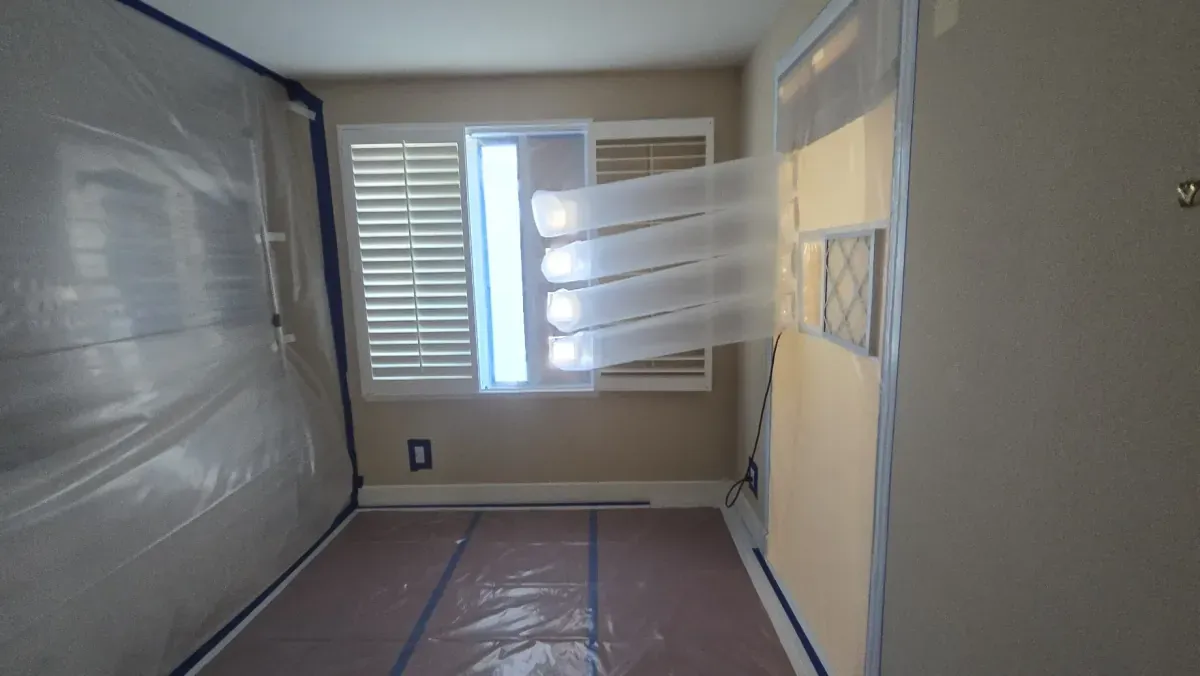
Mold Remediation
Services
Professional Removal & Restoration
We offer comprehensive mold remediation services, beginning with a FREE assessment to evaluate and effectively address mold concerns in your environment.
Our Remediation Services
Complete mold removal and remediation services to restore your property to a safe, healthy condition.
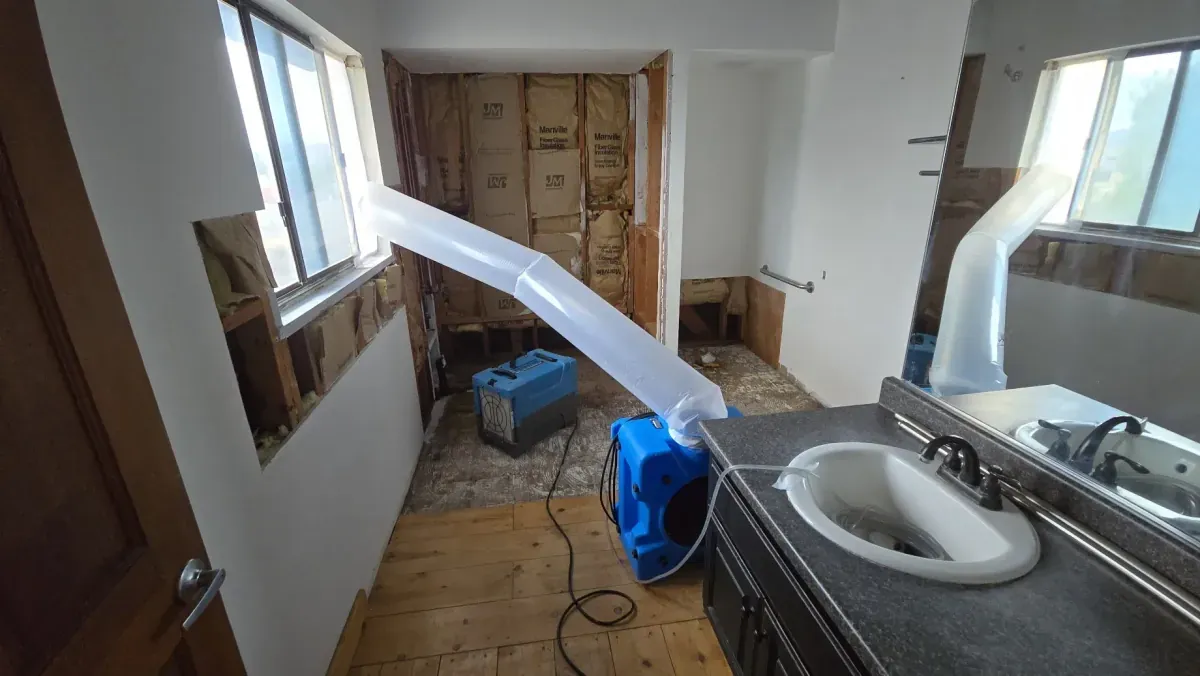
Mold Remediation
Targeted removal and cleaning of mold-impacted materials with a focus on preventing spread and restoring clean conditions.
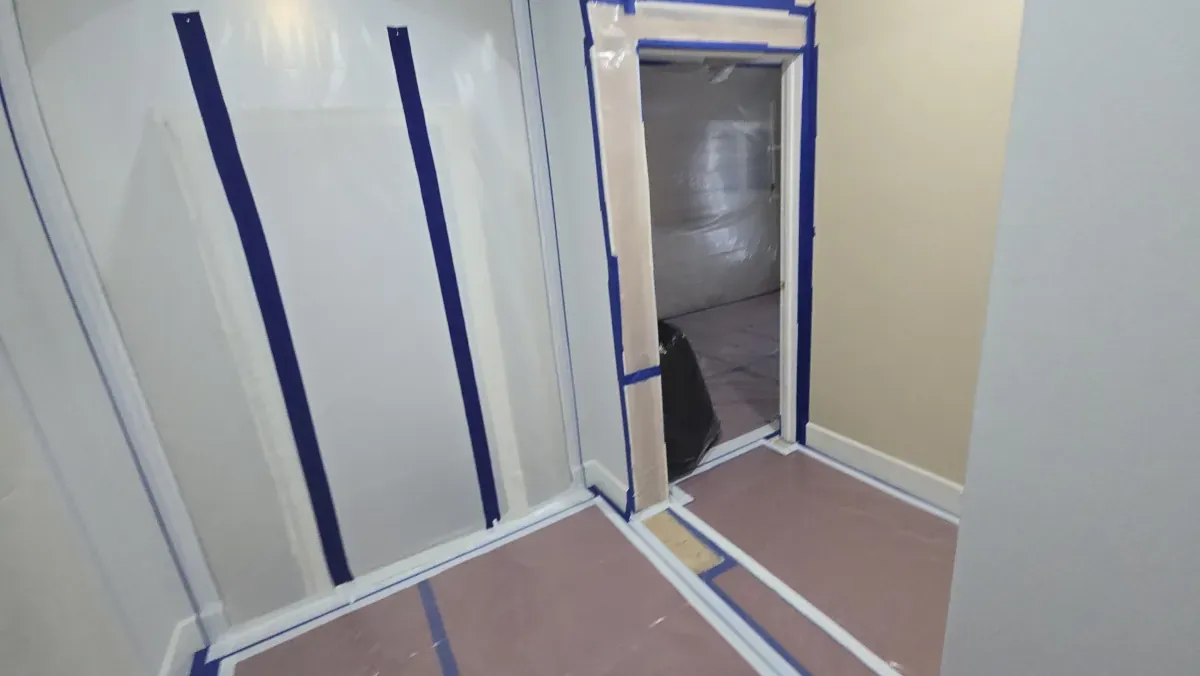
Containment & Negative Air
Isolation barriers and HEPA-filtered air pressure systems to separate work zones from clean areas and control airflow during remediation.
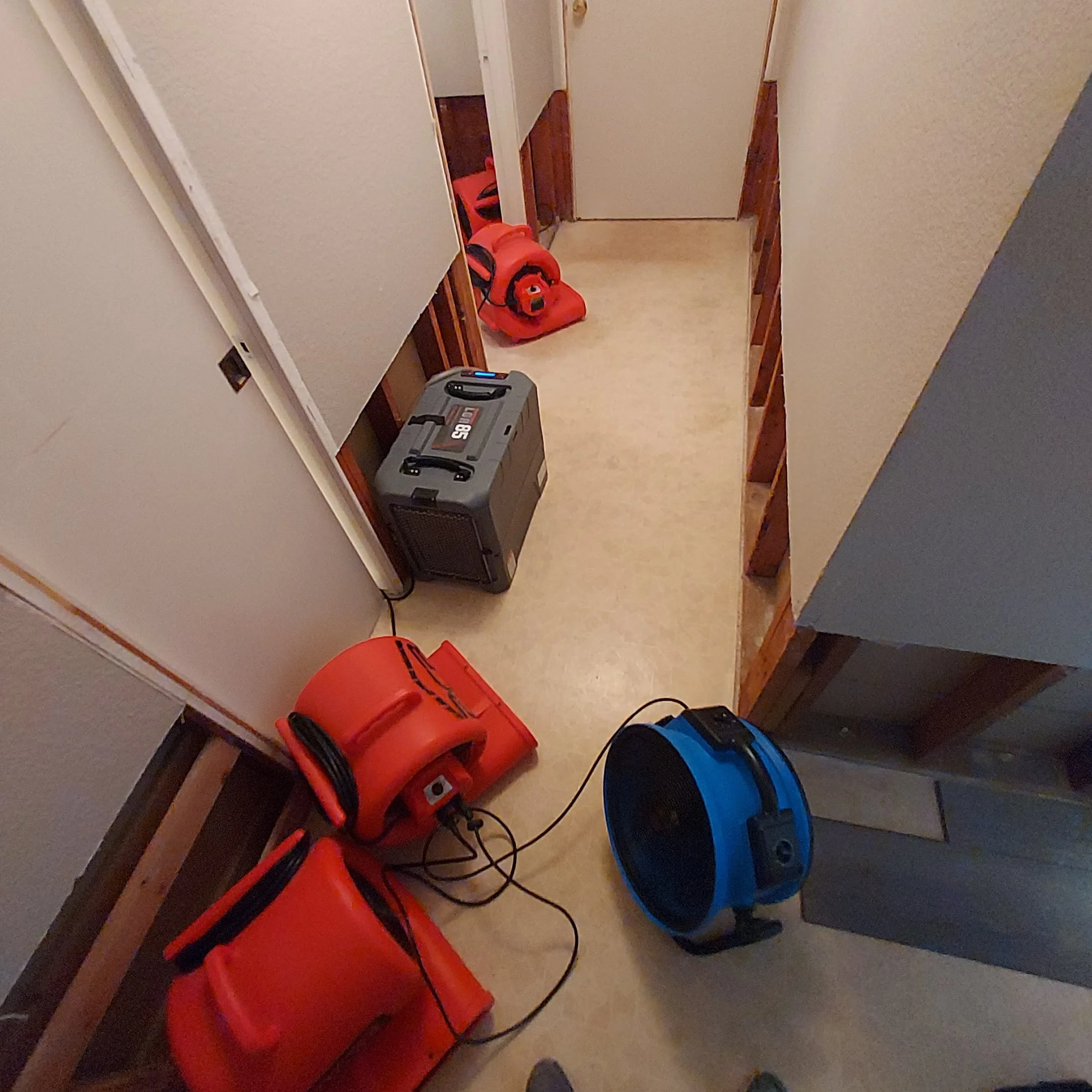
Dehumidification & Drying
Commercial-grade moisture removal from air and structures using psychrometry-based monitoring to prevent mold regrowth.
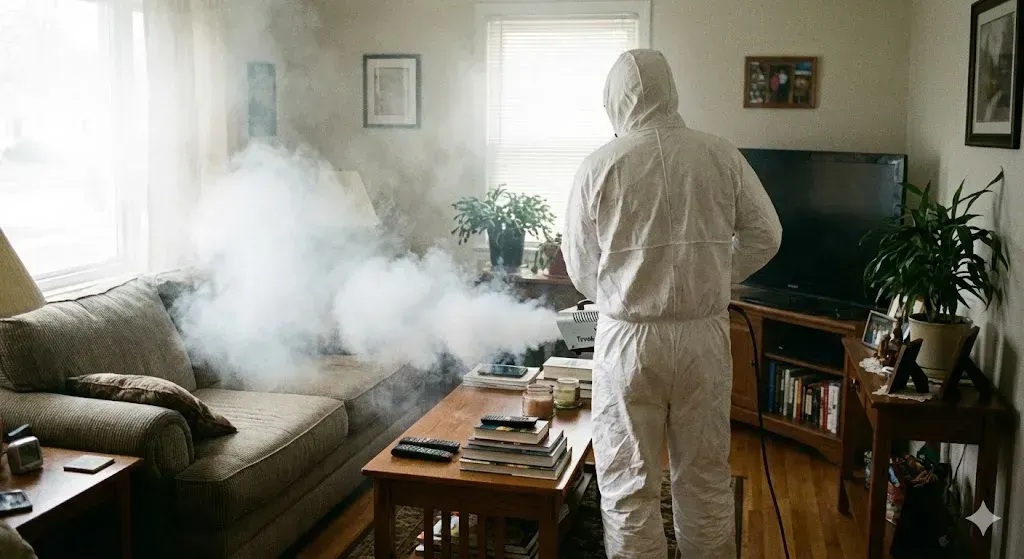
Whole Home Decon
Broad decontamination for odor and microbial particle control across multiple rooms when impact isn't isolated.
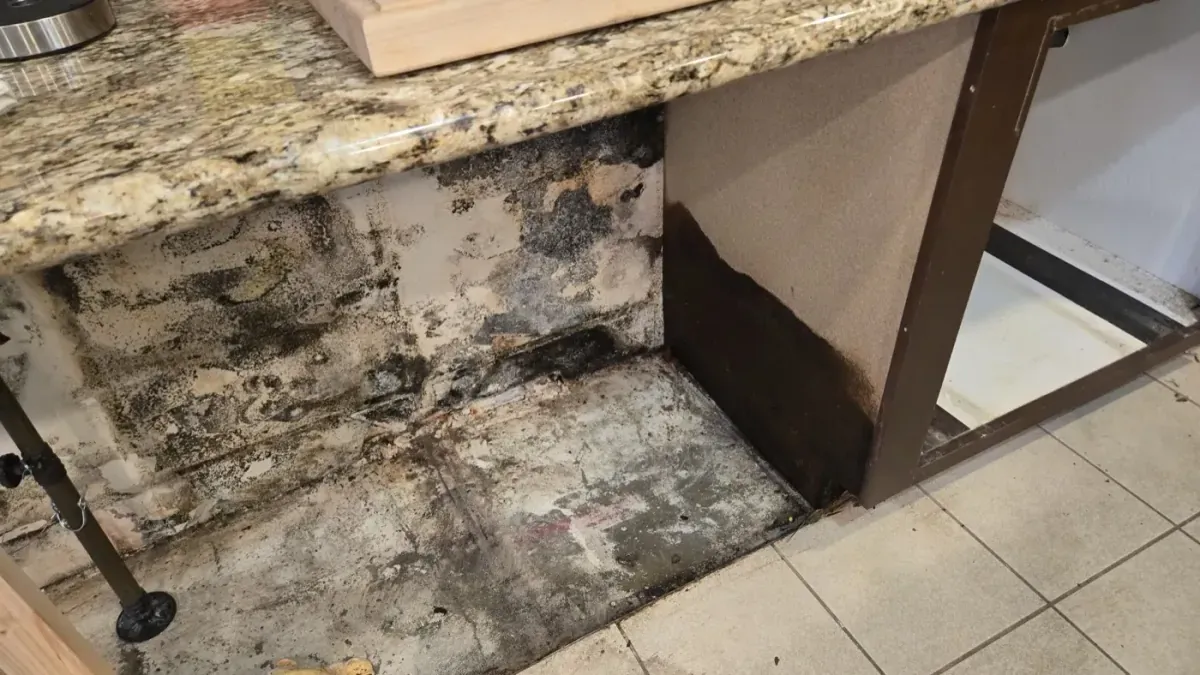
Kitchen Cabinet Remediation
Leak-driven cabinet assessment, controlled removal when needed, and detailed cleaning/decontamination to address hidden mold growth.
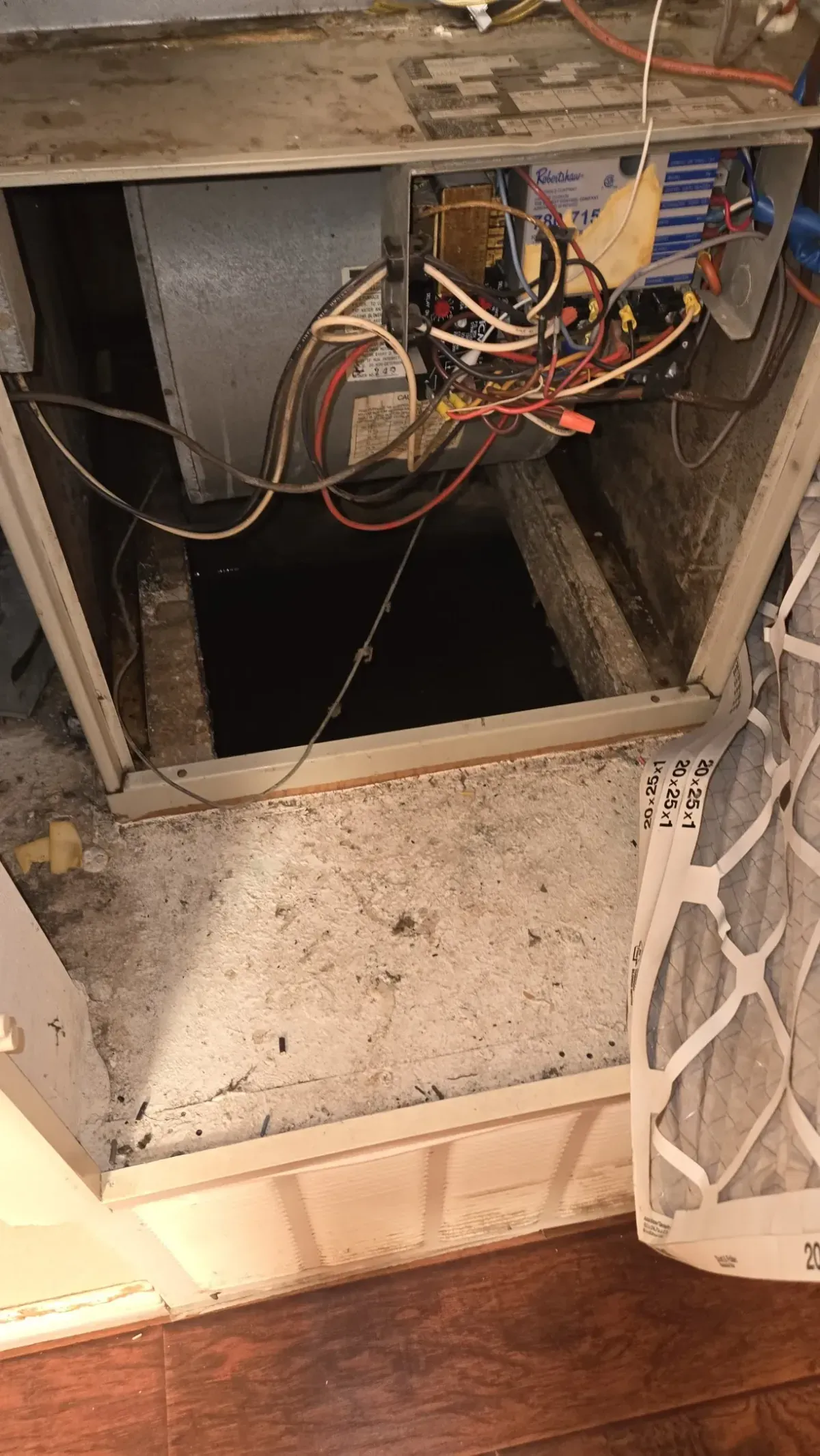
HVAC/Ducting Decon
System-focused cleaning and decontamination when HVAC components may be contributing to distribution or persistent odor.
Mold Remediation
Procedure Outline
Our Process
Identify Sources & Prioritize Risk Areas
We determine what’s driving the issue—leaks, condensation, ventilation imbalance, or past water damage—and identify the most likely mold sources and pathways (wall cavities, cabinetry, flooring transitions, HVAC influence, and adjacent rooms).
Containment + Air Control
When needed, we isolate impacted areas with containment barriers and implement controlled airflow (including negative air pressure when warranted) to help reduce airborne migration. We protect contents, establish controlled entry/exit, and follow clean work practices to limit dust and cross-contamination.
Targeted Remediation
We remove or address affected porous materials that can’t be effectively cleaned and access hidden impact zones in a controlled way (behind cabinets, inside wall cavities, around plumbing penetrations). Materials are handled and disposed of properly to reduce the chance of spread.
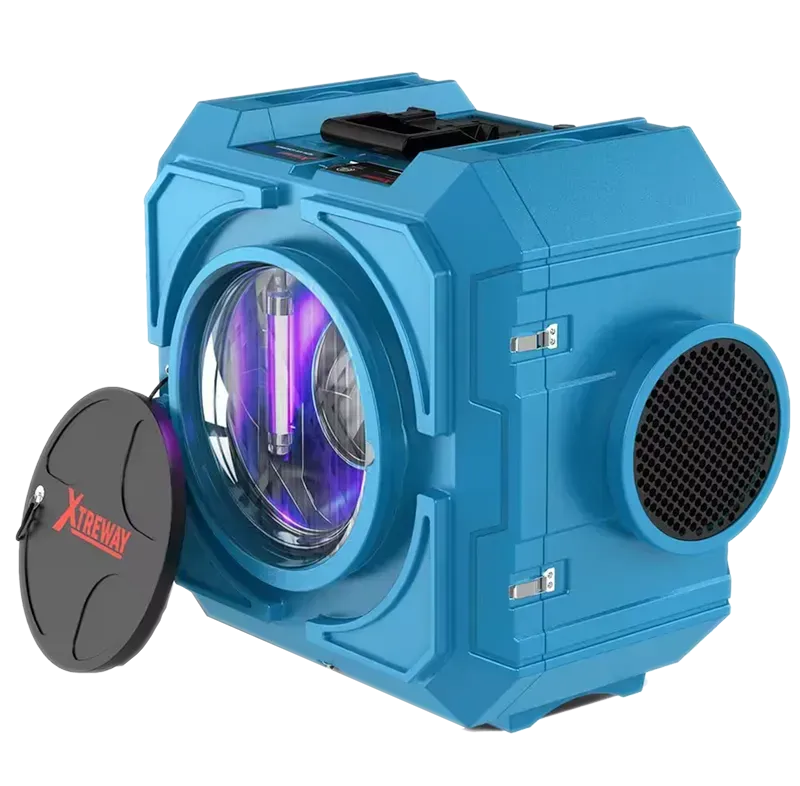
Detailed Cleaning & Clearance Readiness
We perform thorough cleaning of remaining structural surfaces and affected contents as appropriate, with a focus on removing settled particulates and residual contamination. This step is designed to support effective clearances and a clean transition out of containment.
Whole-Area Decon + HVAC/Duct Options
When the concern extends beyond a single area—or when odor and distribution pathways are a factor—we can add whole-area decontamination and/or HVAC/duct decontamination to help address airborne and surface-level residuals and reduce the likelihood of recurrence through system influence.
Clearance Confirmation & Closeout
We complete clearance testing to confirm effective remediation, then deliver a closeout package with documentation and warranty details. From there, we outline reconstruction options and can assist with rebuild planning or fulfillment.
How We Plan Remediation
Remediation isn't a “spray” service—it's a controlled process designed to remove the contaminated material and leave the area clean and reconstruction-ready. We build the plan around:
- Source correction & moisture stability (leaks, condensation, ventilation issues)
- Cross-contamination risk (occupied home, sensitive individuals, multi-room impact)
- Material type (porous vs semi-porous vs non-porous handling)
- Pathways & hidden mold sources (wall cavities, cabinetry, flooring transitions, HVAC influence)
- Clearance readiness (final cleaning aligned to support effective clearance testing)
For remediation planning and handling of mold-damaged structures and contents, we align work practices with ANSI/IICRC S520 concepts as applicable (procedural guidance for remediation).
Identify Sources & Prioritize Risk Areas
We determine what's driving the issue—active leaks, intermittent moisture, condensation, ventilation imbalance, or past water damage—and identify the highest-likelihood mold sources and pathways. This prevents “surface-only” work and helps ensure the remediation addresses the actual cause.
What We Look For
- Water staining and material deterioration patterns
- Odor mapping and where it intensifies
- Likely concealed impact zones (behind cabinets, under flooring edges, wall cavities)
- HVAC influence (symptoms/odor that track with runtime, returns near problem areas)
What We Use
- Targeted inspection + moisture screening to confirm suspect materials
- Thermal imaging as a screening tool when appropriate
- A scope plan that matches the risk level and building conditions
Containment + Air Control
Clean Work Practices
When needed, we isolate impacted areas with containment barriers and establish controlled airflow (including negative air pressure when warranted) to help reduce airborne migration. We also protect contents, establish controlled entry/exit, and follow clean-to-dirty work practices to limit dust and cross-contamination.
Containment May Include
- Work-zone isolation and protected pathways
- Contents protection and controlled staging
- Controlled entry/exit practices to reduce tracking and spread
Air Control May Include
- Negative air control when conditions warrant
- Air filtration strategies to reduce airborne particulate during work
- Monitoring the work zone to keep adjacent areas protected
Targeted Remediation of Affected Materials
We remove or address affected porous materials that can't be effectively cleaned and access concealed impact zones in a controlled manner (inside wall cavities, behind cabinetry, around plumbing penetrations). Materials are handled and disposed of properly to reduce the chance of spread.
Common Materials/Areas This Applies To
- Drywall, insulation, baseboards, trim, sink base cabinets
- Flooring edges and underlayment transitions
- “Hidden” areas where moisture traveled beyond the visible stain line
Need Mold Removed?
Our certified remediation specialists are ready to restore your property. Contact us for a free assessment.
Detailed Cleaning of Remaining Structure & Contents
Once the affected materials are addressed, we perform thorough cleaning of remaining surfaces—focused on removing settled particulate and residual contamination that can contribute to odor and recurrence.
This Step May Include
- Detailed cleaning of remaining framing and structural surfaces
- Targeted cleaning of affected contents when appropriate
- Focused attention to ledges, cavities, and transitions where settled particulate accumulates
Whole-Area Decon + HVAC/Duct Options + Final Clean
When conditions extend beyond a single area—or when odor and distribution pathways are a factor—we can add whole-area decontamination and/or HVAC/duct decontamination. This step is followed by a final detailed clean designed to support clearance readiness and a smooth transition to reconstruction.
Whole-Area Decon May Be Appropriate When
- Odor persists or impact spans multiple rooms
- There’s a history of widespread dust/particulate migration
- The goal is to reduce residual airborne and surface-level contaminants
HVAC/Duct Decon May Be Appropriate When
- Symptoms/odor track with HVAC runtime
- Returns/supplies are near the affected zone
- The system may be influencing distribution or reintroducing particulate
Clearance Confirmation + Documentation + Reconstruction Options
Clearance testing can be performed to confirm effective remediation and readiness to move forward. We provide a closeout summary with documentation, applicable remediation warranty information, and clear reconstruction options—whether you prefer to rebuild with us or coordinate repairs separately.
Closeout Includes
- Clearance pathway and test coordination (as applicable)
- Documentation summary (photos/notes of completed remediation)
- Reconstruction guidance and options
- Warranty information (where applicable)
Remediation Method Guides
Learn more about the specific methods and protocols used during professional mold remediation.
Containment & Negative Air Pressure
Physical barriers and HEPA-filtered airflow control to isolate work zones and prevent spore migration during remediation
Dehumidification & Drying
Commercial-grade moisture removal from air and structures to prevent mold regrowth
Mold Abatement & Removal
Targeted removal and dual-step treatment of mold-affected materials and structural surfaces
Antimicrobial Decontamination
Whole-home atomized treatment using botanical essential oils to neutralize mold, bacteria, and odors
Transport & Disposal
Sealed bagging and compliant disposal of mold-contaminated materials at approved facilities
Sink/Cabinet Repair
Kitchen cabinet rebuilding after mold remediation using matching materials for a seamless finish
Post-Remediation Clearance Testing
Independent air and surface sampling to verify remediation was effective before reconstruction
HVAC & Duct Decontamination
Addressing mold contamination inside ductwork and HVAC components to prevent redistribution
Mold Remediation by City
We provide professional mold remediation across Southwest Riverside County. Each community has distinct housing styles and moisture challenges. Select your city for location-specific details.
Murrieta
Family homes with hidden plumbing leaks, bathroom and laundry moisture buildup
Temecula
Old Town to Wine Country -- marine layer condensation, tract home wall cavities
Menifee
Newer construction, Heritage Lake area, slab-on-grade foundation moisture
Wildomar
Mission Trail corridor, spread-out lots, irrigation runoff and slab moisture
Winchester
Semi-rural properties, detached structures, slow unnoticed leaks behind walls
Canyon Lake
Gated lakeside community, elevated humidity near water, stored gear and boats