

Negative Air
Pressure
Engineered Airflow Control During Remediation
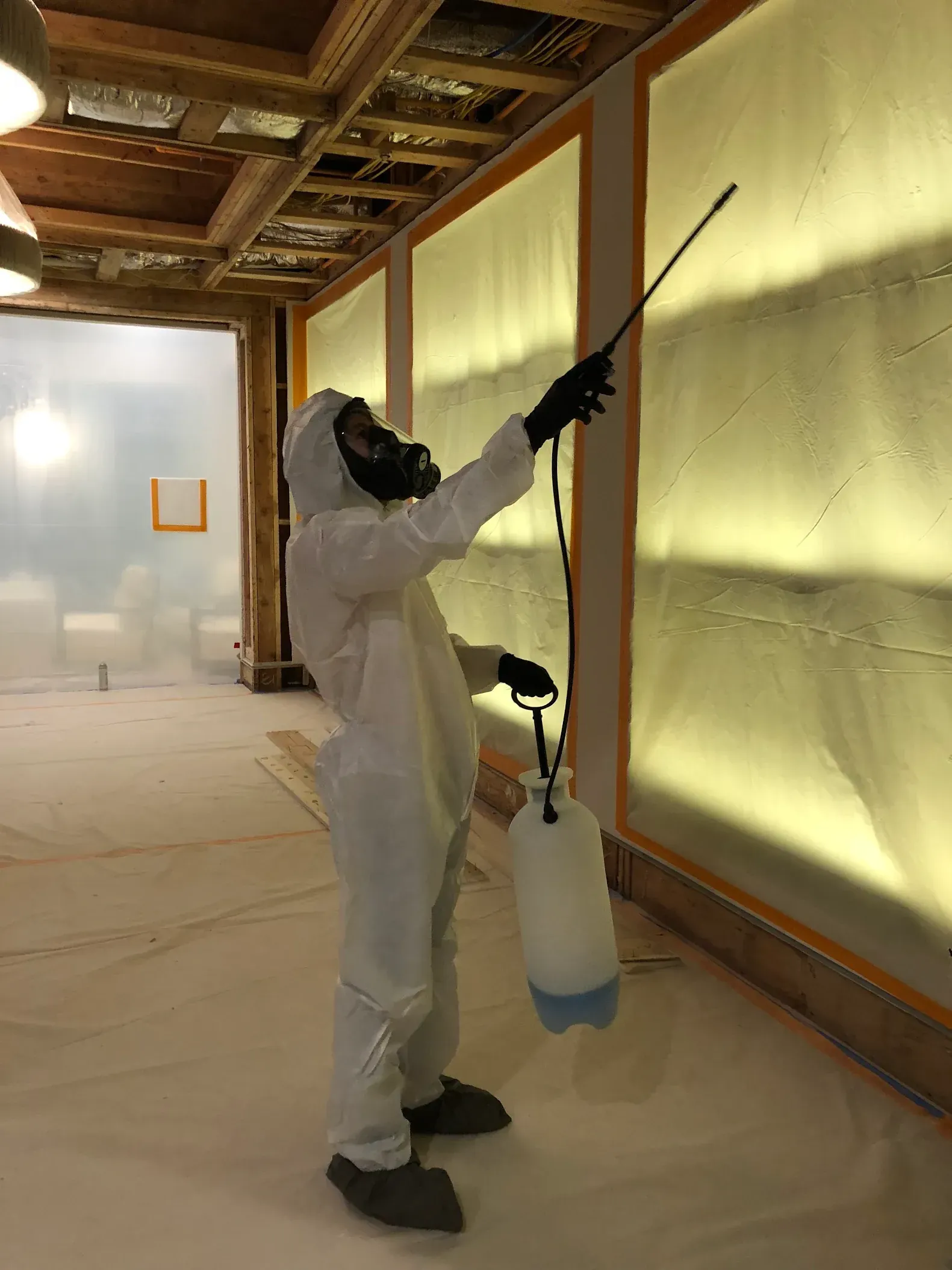
Negative air pressure creates a controlled pressure differential within the containment zone, ensuring airborne particulate is drawn inward — not outward. Combined with HEPA filtration, this prevents spore migration into occupied spaces during active remediation.
Negative Air Pressure
When mold-affected materials are disturbed during mold abatement and removal, spores and fragments become airborne. Without controlled airflow, these particles can migrate into adjacent rooms, HVAC systems, and occupied spaces—spreading contamination beyond the original scope.
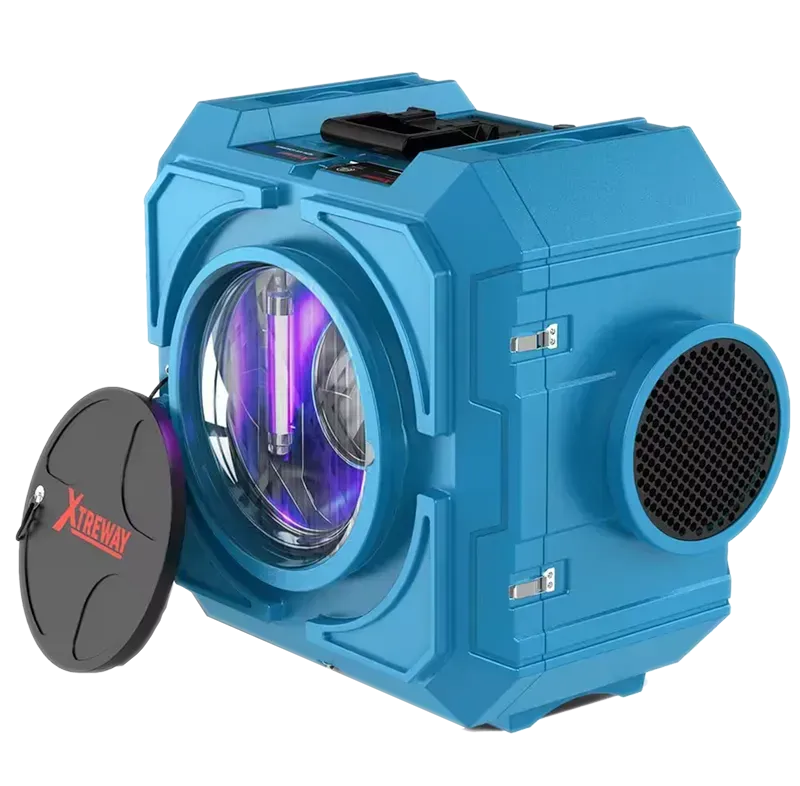
Negative air pressure uses HEPA-filtered air scrubbers to create a pressure differential that draws air into the containment zone rather than allowing it to escape. An air filtration device ensures that airborne particles, including mold spores, are captured and do not reach other parts of the property.
CERTIFIED & Recommended






When Negative Air Pressure Is Used
Negative air pressure is applied based on the severity and scope of the project. It's a critical component when contamination risk extends beyond the immediate work area.
Significant Contamination Scope
When remediation involves large areas or multiple surfaces, negative air pressure prevents airborne particulate from escaping the containment during active demolition and cleaning.
Occupied Properties
When residents remain in the home during remediation, negative air pressure ensures contaminated air flows into the work zone rather than into living spaces.
Clearance Testing Requirements
Post-remediation clearance protocols often require documented negative air pressure as part of the conditions for valid air sampling results.
HVAC System Protection
Negative air pressure prevents contaminated air from being drawn into the HVAC system through nearby returns, reducing the risk of whole-home distribution.
How Negative Air Pressure Works
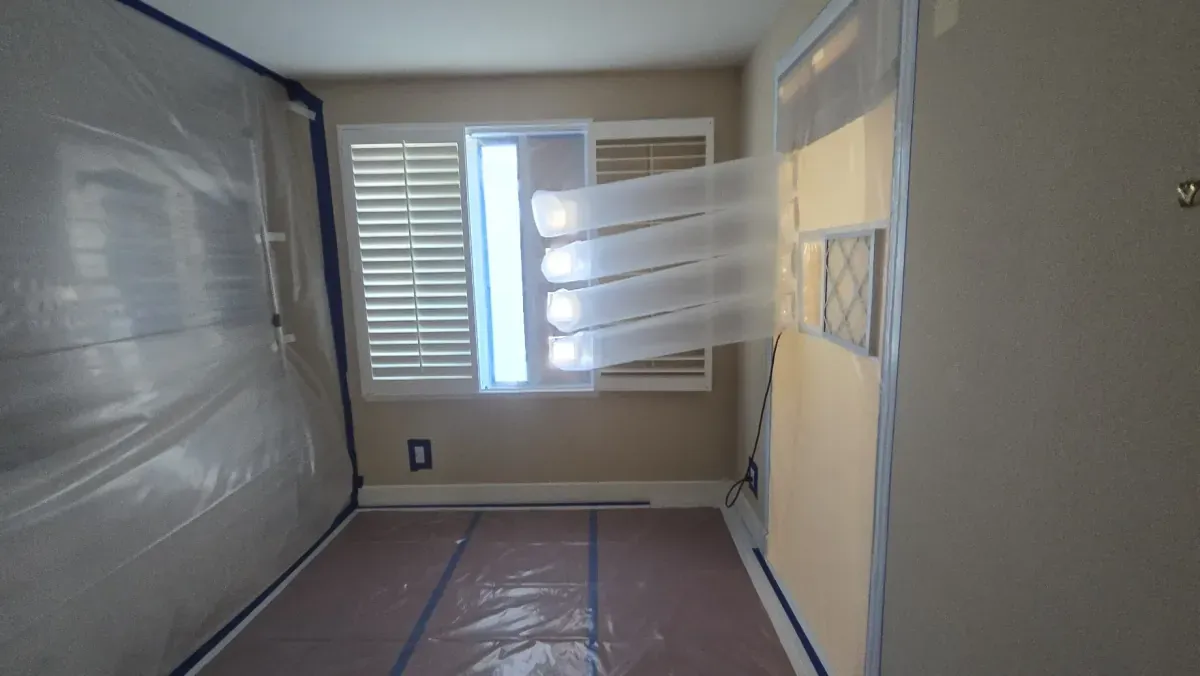
Air scrubbers equipped with HEPA filters draw air from inside the containment zone and exhaust it outside the home. This creates a slight vacuum effect that keeps contaminated air from escaping into occupied spaces.
HEPA air scrubber placement
Air scrubbers are positioned inside the containment zone and connected to exhaust ducting that routes filtered air outside the home.
Pressure differential established
The scrubbers draw air from inside the containment, creating lower pressure inside relative to the surrounding spaces. Air naturally flows inward through any gaps.
HEPA filtration captures particulate
All air passing through the scrubbers is filtered through HEPA media, capturing particles down to 0.3 microns — including mold spores and fragments.
Continuous operation during work
Negative air machines run continuously during active remediation and may continue through cleanup and pre-clearance preparation.
Key Components of Negative Air Systems
HEPA Air Scrubbers
Industrial air filtration units that capture particles down to 0.3 microns. These are the primary tool for both air cleaning and pressure management.
Exhaust Ducting
Flexible ducting routes filtered exhaust air outside the home, maintaining the pressure differential without recirculating contaminated air.
Pressure Monitoring
The containment zone is monitored to verify adequate pressure differential throughout the remediation process, ensuring consistent airflow direction.
Why Air Control Matters During Remediation
Without controlled airflow, remediation can spread the problem it's trying to solve. Negative air pressure is the engineering control that keeps contamination where it belongs.
- Prevents spore migration into clean areas during demolition and cleaning
- Protects occupants who remain in the home during remediation
- Reduces risk of HVAC system contamination from nearby work zones
- Supports valid post-remediation clearance testing conditions
- Captures airborne particulate that would otherwise settle on clean surfaces
Negative Air Pressure Control
Protect Your Home During Active Remediation
Negative air pressure is a critical safeguard during mold removal. By maintaining controlled airflow into the work zone, we prevent spore migration and support conditions for successful clearance testing.
Frequently Asked Questions
What is negative air pressure in mold remediation?
Negative air pressure means the air pressure inside the containment zone is kept slightly lower than the surrounding areas. This ensures that any air movement flows into the work zone — not out of it — reducing the chance of spores and fragments migrating into clean spaces.
Is negative air pressure always used during remediation?
Not always. It depends on the severity and scope of the project. Negative air pressure is typically used when the contamination area is significant, the home is occupied, or when required by the remediation protocol to support post-remediation clearance testing.
How long do air scrubbers run during remediation?
Air scrubbers and negative air machines run continuously during active work and may continue during cleanup and pre-clearance preparation. Runtime depends on the scope and conditions found during the project.
Can negative air pressure affect heating or cooling in my home?
The pressure differential is localized to the containment zone and does not significantly affect the overall HVAC performance of your home. HVAC registers within the containment are sealed, and the system continues to operate normally for the rest of the property.
Other Remediation Phases
Negative air pressure works alongside containment and other remediation phases. Each step supports the next.
Containment Area Setup
Physical barrier construction to isolate the work zone from occupied spaces.
Mold Abatement & Removal
Targeted removal of mold-affected materials within the contained, pressure-controlled work zone.
Dehumidification & Drying
Moisture removal from air and surfaces to prevent mold regrowth after remediation.
Antimicrobial Decontamination
Whole-home antimicrobial treatment after remediation to neutralize residual contamination.
HVAC & Duct Decontamination
System-level cleaning when HVAC components are contributing to contamination.
Post-Remediation Clearance
Lab-certified verification that air control and remediation achieved the intended result.
Related Services
Negative air pressure is one component of professional remediation. Explore our related services.
Mold Remediation
Full remediation process including containment, removal, and clearance — negative air pressure is integrated into qualifying projects.
Mold Inspection
Visual assessment, infrared screening, and moisture verification to identify the scope before remediation begins.
Air Quality Testing
Lab-certified air sampling to evaluate indoor air quality and verify the effectiveness of air control measures.